

How To Dirty Pour Acrylic Paint On A Clay Pot
This paint pour technique requires no harsh chemicals, unlike some others. You can use multiple colors and different color combos to make each project piece unique. I marbled a terra cotta or clay pot using the paint pour, or dirty pour, technique.
This is one of those projects where a video is the best tutorial, and I made one showing the whole process. I break down the marbling technique step by step in this post, but there is nothing like seeing the paint pour in action.
Most faux marbling techniques start with acrylic paint, which you add one or more chemicals to. That’s a little scary for me.
The FolkArt® Marbling Paint doesn’t have to be mixed with any chemicals. The mixing has already been done, and the paint is non-toxic. You simply pour on the specially-formulated acrylic paint and watch the magic happen.
How To Paint Pour Acrylic Paint On A Clay Pot
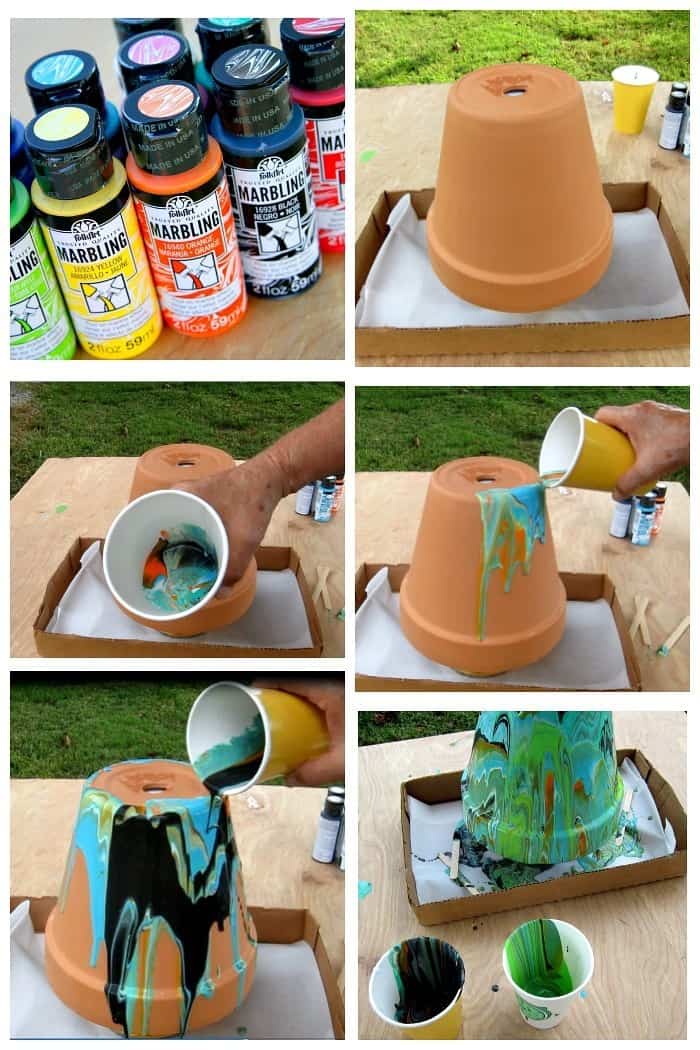
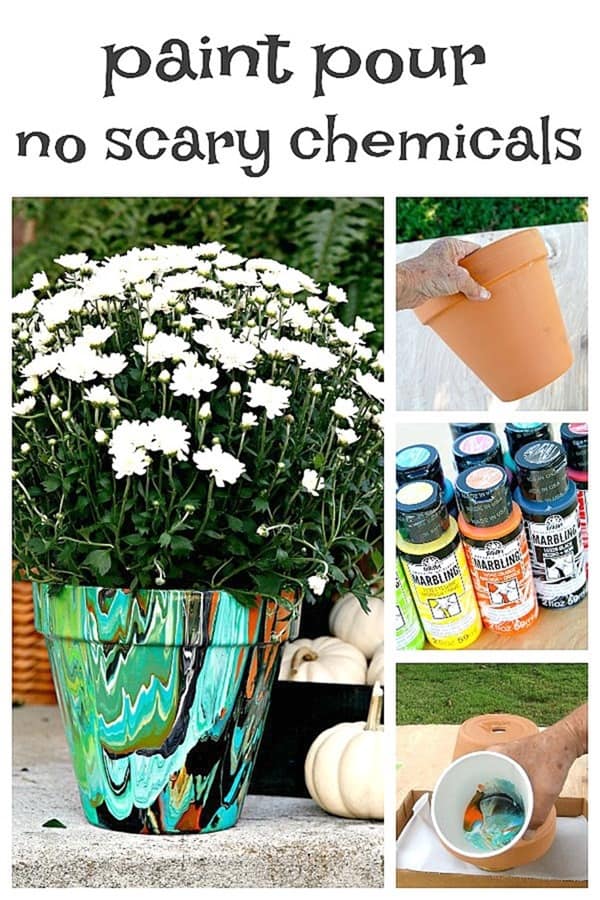
1. Select several FolkArt Marbling Paint colors for your pour.
It’s best if you have 4 or more colors. I choose 5 paint colors one of them being white. It’s good to always have white in the mix. You get a totally different look without the white. The photo below shows 9 marbling projects by 9 bloggers.
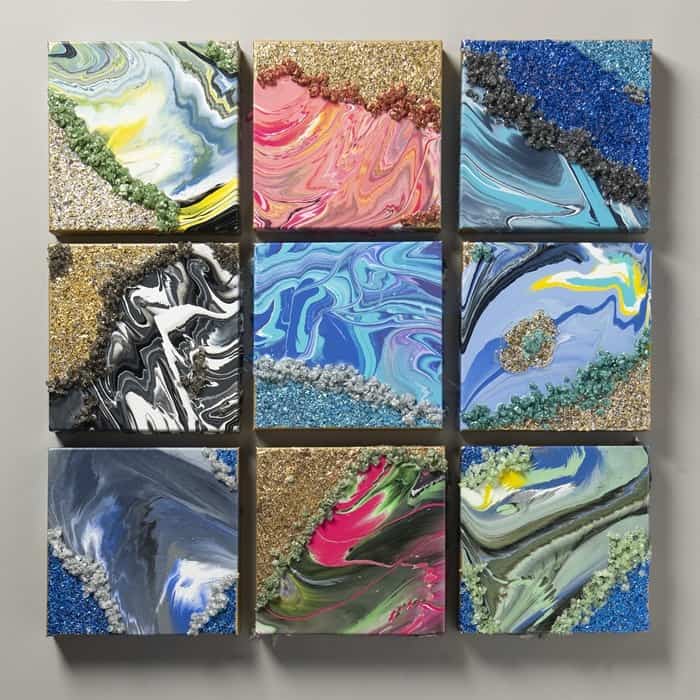
This marbled project display gives you an idea how much the marbling can vary. There are an endless number of paint combinations and designs. My project is the middle one on the bottom row. The other elements in the projects are geode crystals and Glitterific paint.
2. Set your paint pour project on a can, plastic paint pyramid, or something similar, to lift it off of the table surface.
The paints will need to drain off of the project and not pool around it. I turned the terra cotta pot upside down and set it over two stacked pint size paint cans. I also set everything inside a parchment lined cardboard box.
3. Pour the paints one by one into a plastic or paper cup.
Swirl them a little or use a popsicle stick ( or something similar) and stir just slightly. I didn’t really stir my paint I used the popsicle stick and basically just drew an x through the paints.
4. Pour the paint over your project.
I didn’t mix up enough paint the first time and had to do a second cup. Keep that in mind for your project. I just went around the pot pouring the paint. My pot isn’t completely covered on one side but that’s the way I wanted it. Once I was finished with the pour I let the paint drip off the rim until I couldn’t see any more drips then I ran my popsicle stick around the top of the rim to remove any excess paint.
5. Let the paint dry for 24 to 48 hours then seal.
Use FolkArt Acrylic Lacquers (Matte, Satin, or Gloss Finishes) or with FolkArt Artists’ Varnish (Satin or Gloss). I sealed my marbled pot with one coat each of Mod Podge Outdoor and Mod Podge Gloss.
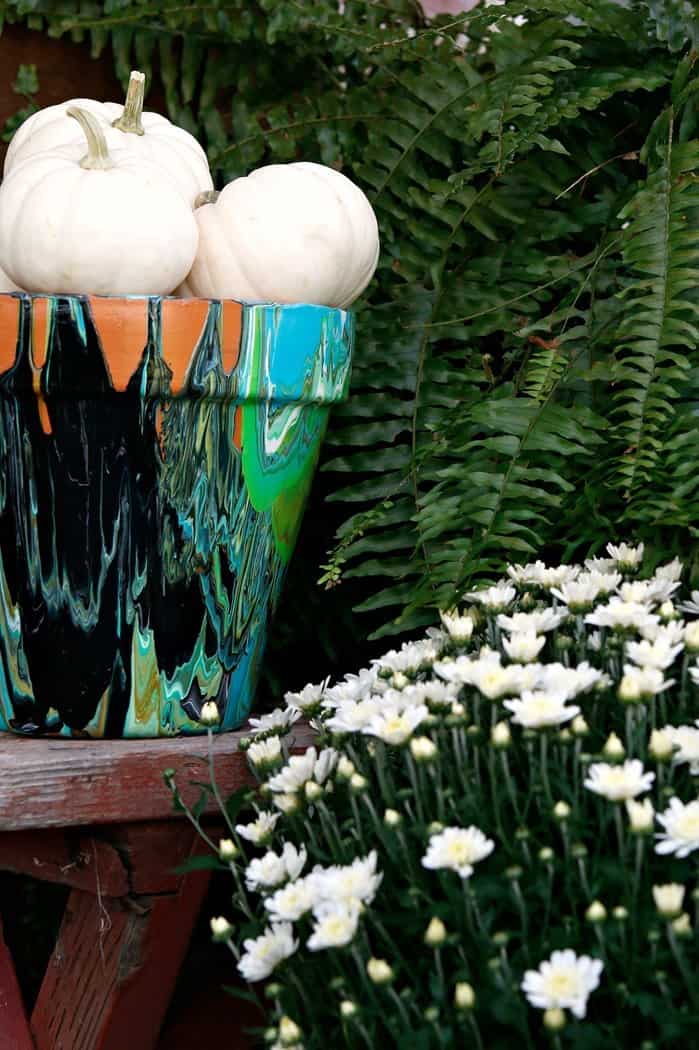 Most regular paints will just blend together and get muddy when you pour them. That’s why I love the FolkArt Marbling Paint—it’s a fluid, medium-body paint that lets the colors flow beautifully while staying completely separate.
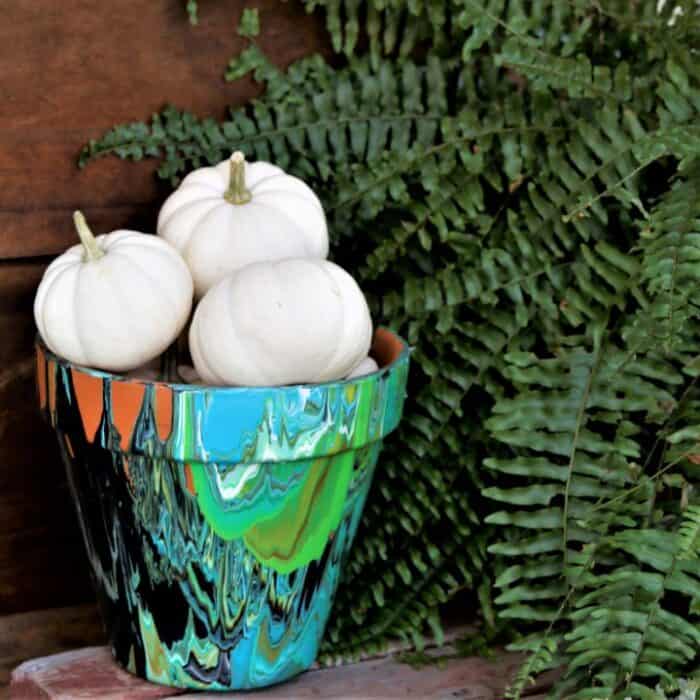
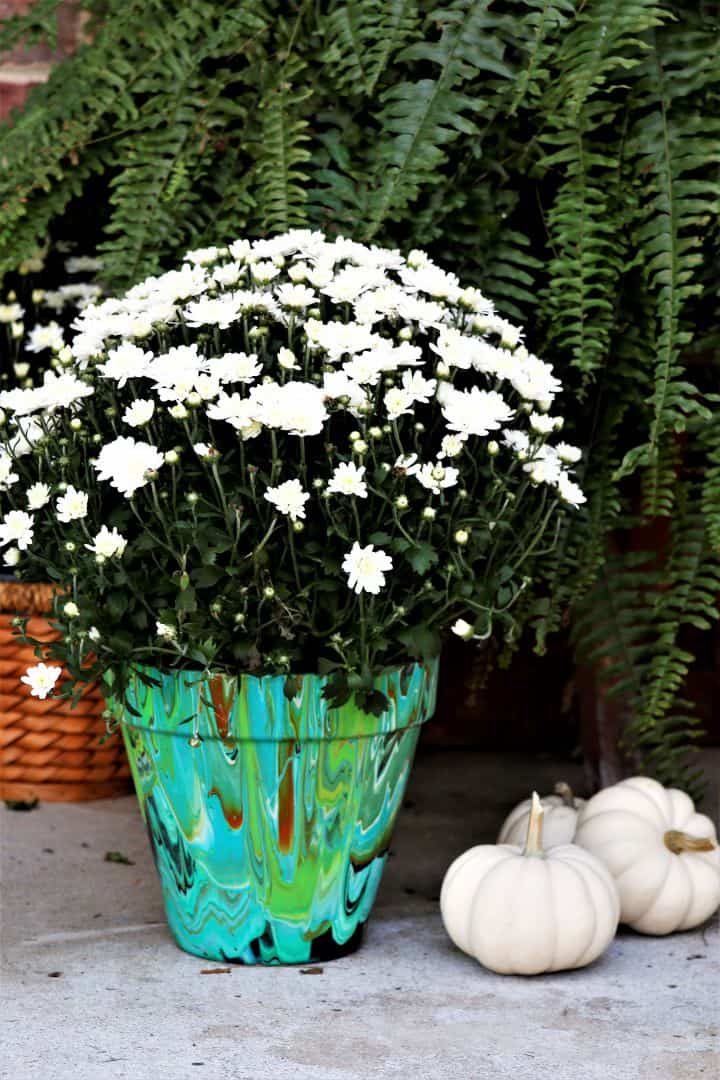
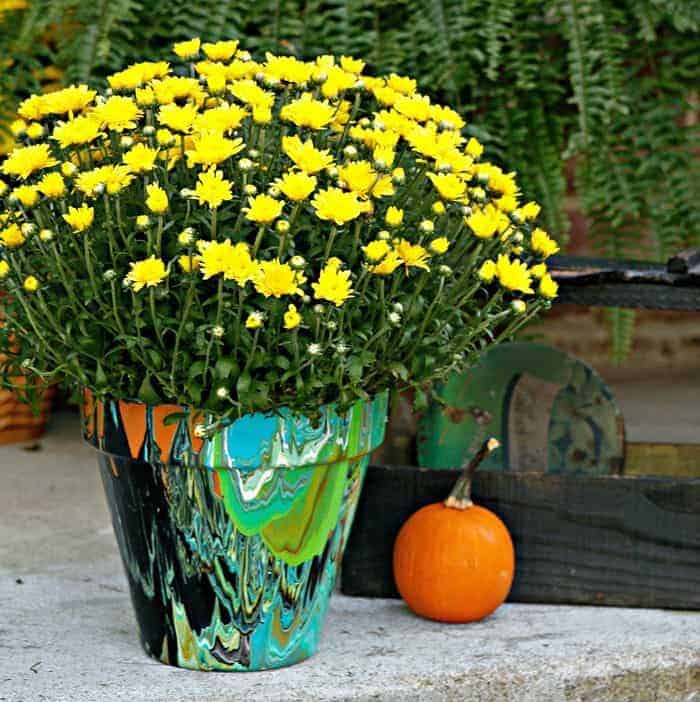
Are you smiling too? I thought so. I chose a color combination that works for any season, but since it’s Fall, I used my finished pot to showcase some bright mums. Because of the way the paint moves, every side of the pot has a totally unique look. The drab terra cotta didn’t stand a chance!
Watch my video to see exactly how the paint pour works….
How To Paint Pour Video Tutorial
Direct Pour vs Dirty Pour
If you want to try different styles, here is how the official FolkArt guide breaks down the two main techniques
Direct Pour Method: Using two or more colors, simply squeeze the paint onto the surface. Paints can be poured in puddles, swirled into designs or even striped in straight lines.
Once the colors have been applied to the surface so that most of the top surface area is covered, lift the surface and tilt it slightly allowing the paints to flow or run into one another.
Change the tilt pattern continually to allow paint to flow in all directions. Additional swirling effects can be added with a toothpick, wood skewer, or point of a stylus.
Dirty Pour Method: Working one color at a time, pour several colors into a plastic cup. Paints can be added in any desired color order and amount.
Once enough paint to cover the project surface has been added to the cup, insert a craft stick or wood skewer into the cup and give the paint one quick stir. Simply pour the cupful of paint over the surface. Then lift the surface and tilt it slightly allowing the paints to flow or run over the surface and mingle with one another.
How To Paint Pour The Easy Way
That’s it. What do you think of the marbling craze? Are you ready to try this technique? What do you think of my mum pot? Did you watch the video? Leave a note for me please. If you like bold colors and 30 minute projects you will love this one…..Confetti Coasters.
As always thanks for being here and have a great day, Kathy
Disclosure: This post is sponsored by Plaid Crafts as part of the Plaid Creators program. All words, project ideas, and opinions are 100% my own.





We did something just like this for Mother’s day gifts when my boys were younger. We made pour painted pots and filled them with flowers for the grandparents. It was so much fun and each pot comes out so unique.
I would love to see a photo of that bottle Naomi. What a nice keepsake from your grandmother.
This looks like a lot of fun to do, Kathy. It is actually a very old technique. I have a little bottle that belonged to my grandmother that was dip-painted. I believe she did it herself but am not certain. But I’m pretty sure that back then the paints used were oil-based which would make it quite a bit messier to clean up. I don’t think water-based paints were available at the time or not widely anyway. Anyway, it’s a pretty cool technique which I’d like to try.
This looks like the best fun ever!
Beautiful! Where did you find the Folk Art Marble Paint? I can’t find it online. Thanks!
Wow, I didn’t know about that. Will have to give it a try. Thanks
Nice!! You Can do this with nail polish as well. There are many videos on this. You drip polish into water and dip the object into polish and rotate. The polish adheres instantly and dries. If you make a mistake or don’t like results you use polish remover and start again. Can also do with spray paint in the water. It’s very cool!
Wow!! I love it!! I’ll be trying this soon.
I love this!! Need to add it to my projects pile