

Cedar Chest Makeover: How To Paint, Distress, and Wax Chalk Paint
I get questions weekly about how to wax chalk-finish paint, or whether chalk-finish paint needs waxing. Sometimes I wax, and sometimes I don’t; it depends on the chalk-finish paint brand I’m using and the type of furniture.
My project today is a cedar chest, and yes, it’s waxed! I chose to wax this piece for a reason, and I’m excited to share it with you.
Quick Project Overview:
-
Paint and Color: Chalk-finish paint (Color: Cascade) creates a beautiful matte base that is incredibly easy to distress.
- Number of Coats: The chest was cleaned well and was not primed. Two coats of paint were applied.
- Drying Time: The first coat of paint dried in an hour, and the second coat was applied. The paint was completely dry after 24 hours.
- Finish Used: Wiping clear or neutral wax over distressed chalk paint instantly deepens the raw-wood highlights and removes the dry, whitish haze left by sanding.
How to Paint, Distress, and Wax Chalk Painted Furniture
It seems like I have at least one cedar chest makeover on the schedule every month—I guess I just have a thing for them! This particular piece is painted, distressed, and waxed, and it turned out absolutely gorgeous (shameful bragging rights intended).

Today is also the Furniture Fixer Upper Tour day, so we have another fantastic lineup of projects waiting for you. You can find all of those inspiration links at the very bottom of this post.
The Cedar Chest
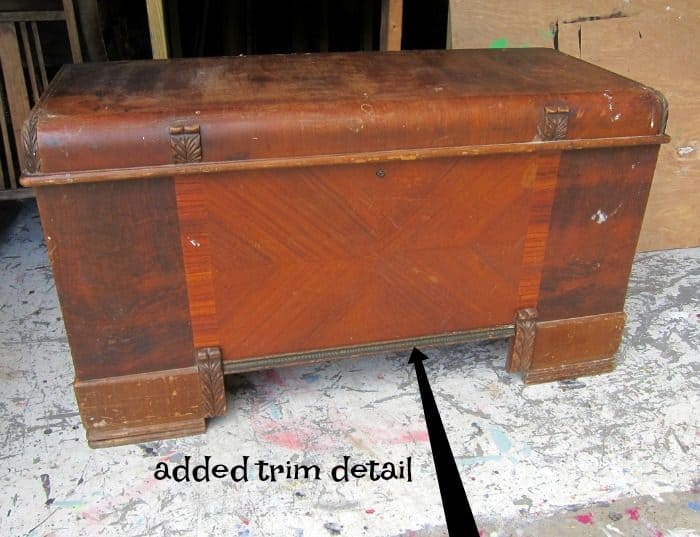
I found the cedar chest for only $40 at my favorite junk shop, and it was worth it. We had to make a few repairs and add a detail to the chest before painting it. You can find the repair tutorial here: How To Repair An Old Cedar Chest
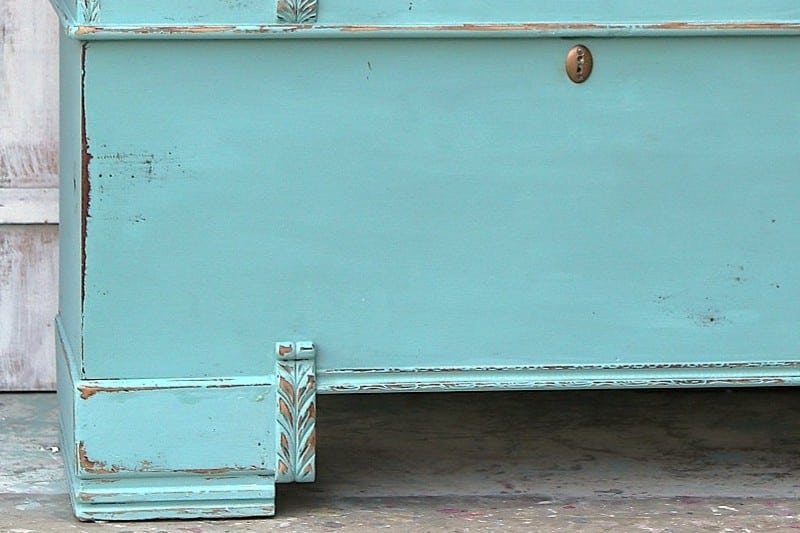
The chest’s unique carved details made it the perfect candidate for a distressed finish. Honestly, a plain paint finish with no special technique, no stenciling, and no antiquing can look a little blah. Distressing the paint adds instant depth and interest.
Supplies and Tools Used in this Project
FolkArt Home Decor Chalk – Cascade
FolkArt Chalk Brush
Howard’s Wax – Neutral
Ryobi Sander
Choosing the Chalk Paint Color for the Makeover
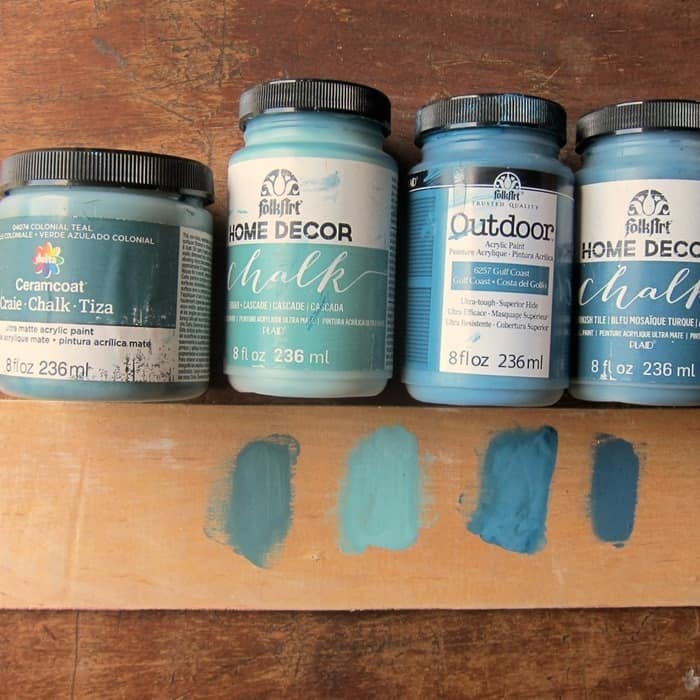
I went to select a paint color for the cedar chest and found 4 promising colors in my paint stash. I painted samples on a piece of wood and really liked all of them.
I thought I might do a two-tone finish… and I did start brushing on a second color on the cedar chest, but I didn’t like it. Not enough contrast. So one color only.
I decided on the second color from the left, Cascade. The pretty color was brighter and fresher than the other three. (By the way, I did a Facebook Live and asked which color everyone liked the best. Be sure to follow me on Facebook.)
How To Match A Paint Color To Your Decor
If you don’t have a stash of leftover paint at home, you don’t have to guess the perfect color. Start by looking at the room where your furniture will live.
Grab a favorite throw pillow, a piece of fabric, or a beloved decor item in the exact colors you love, and bring it to the store. Holding your inspiration piece directly against the paint display makes it incredibly easy to spot the undertones that will look best in your space.
At the paint counter, grab a handful of paint chips or paper color samples that closely match. Don’t just look at them under the harsh, bright store lights—they will look completely different once you get them home.
Tape the paint chips directly onto your furniture piece and watch how the color changes throughout the day in your room’s natural light. This quick trick saves you from buying a whole can of paint only to realize it looks completely different on your piece than it did on the store shelf!
How to Apply Chalk Finish Paint
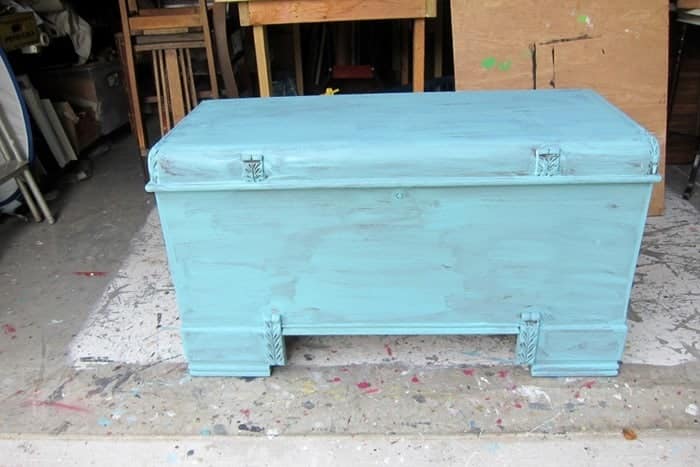
This is what one coat of chalk finish paint looked like. I applied a second coat after this one dried. It dried in less than 1 hour.
How to Distress Chalk Painted Furniture
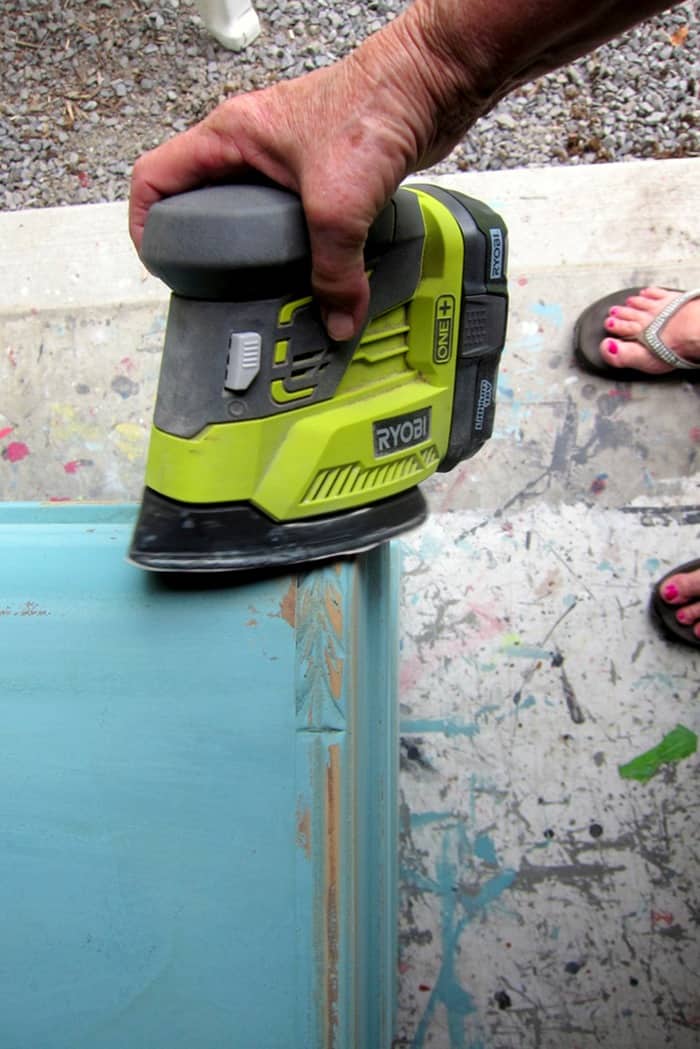
After the paint dried, I distressed all the lovely details using a battery-powered sander. Then I ran the sander over the whole chest—working on the edges and a few spots on the front and top.
I wanted to sand off just a bit of paint in some areas and remove a lot of paint from the carved details.
I tried sanding by hand at first, but I was having a hard time getting the paint off. So I pulled out my power sander, and it did the job in no time. Chalk paint adheres well and is difficult to distress after it cures for more than a day or so.
Sanding Tips for Distressed Furniture
-
The Power Sander Advantage: If the paint is adhering well, don’t wear out your arms sanding by hand. A lightweight orbital sander, detail sander, or mouse sander for tight spaces makes quick work of stubborn paint.
-
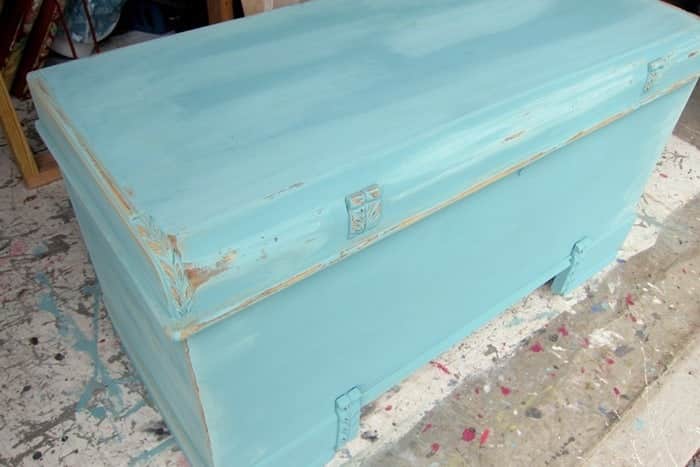
Remove the Sanding Haze With Wax: This is how the chest looked after sanding it all over. You can see the whitish or lighter areas where the sander was used. Don’t panic when you see this dry haze—to hide those areas and bring back the deep wood color, just wax the paint.
How to Wax Chalk Painted Furniture
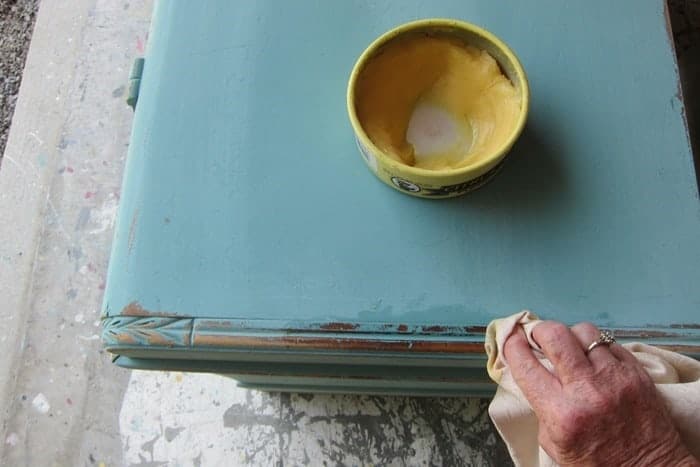
Waxing the paint and the raw wood will make your chalk-painted piece shine!
Step-by-Step Waxing Tips
-
Apply with a Rag: Use a clean, lint-free rag to apply the wax. When you wipe the wax over the chest, you’ll see the distressed raw wood instantly darken up beautifully.
-
Watch the Streaks Disappear: Don’t worry about any white sanding streaks on the paint—the wax makes them vanish immediately.
-
Dry and Buff: The wax will dry in about 30 minutes. Once it’s dry, take a fresh lint-free rag and buff the surface. The paint will have a gorgeous, soft sheen.
When to Use Tinted Wax
When I want to darken, age, or antique painted furniture, I use tinted Howard’s Wax in the color Walnut. I love Howard’s because it doesn’t cost an arm and a leg, and it adds a really nice sheen and patina to a painted finish.
Add the Finishing Detail
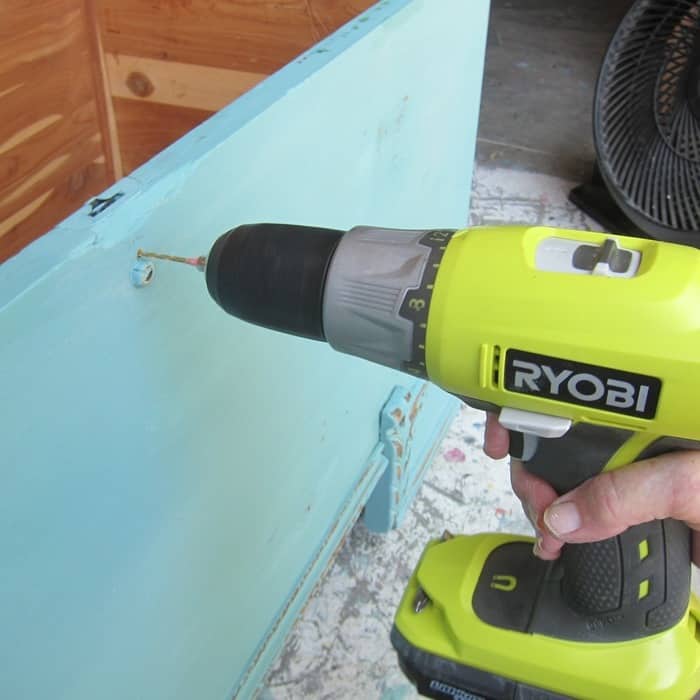
I removed the lock from the chest, leaving a small metal insert in place. I found a brass keyhole escutcheon in my stash and drilled holes to place it over the metal piece.
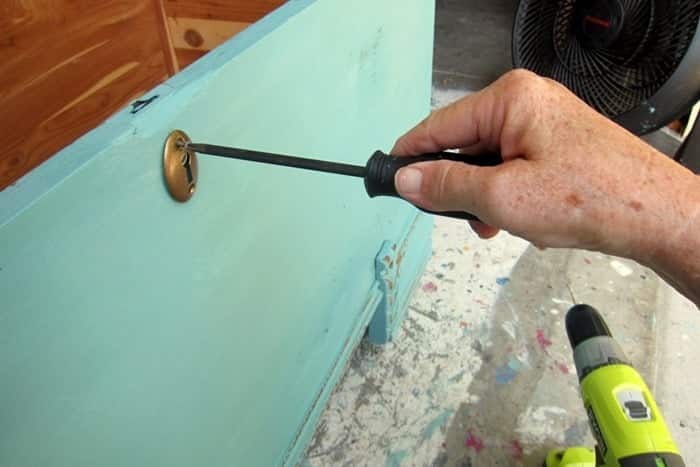
The brass was a bit too shiny, so I spray-painted the piece with Rust-Oleum Antique Brass Metallic Spray Paint.
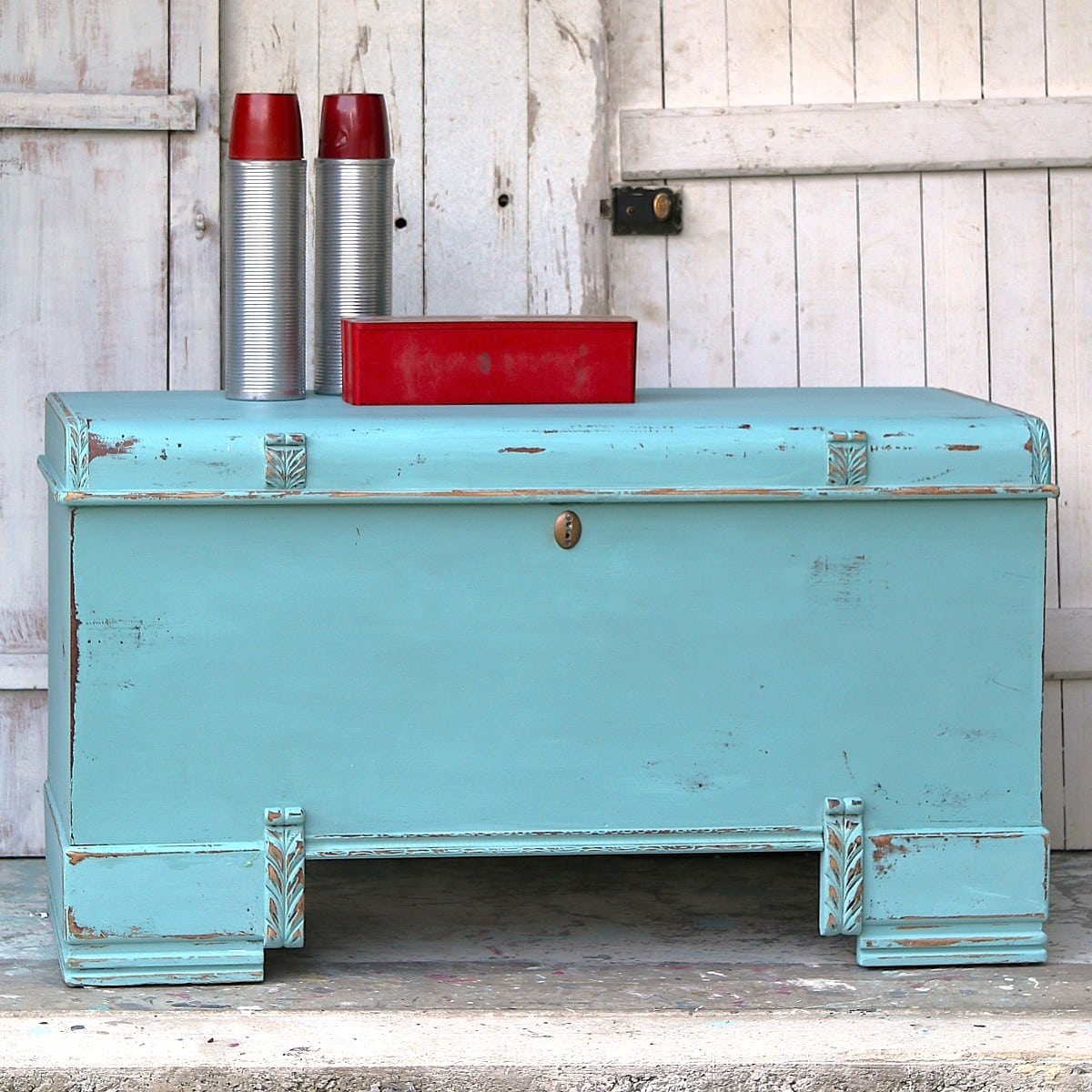
The keyhole escutcheon was the finishing touch the cedar chest needed. The Cascade color paint is a winner. The distressing is icing on the cake.
The Finished Cedar Chest Makeover
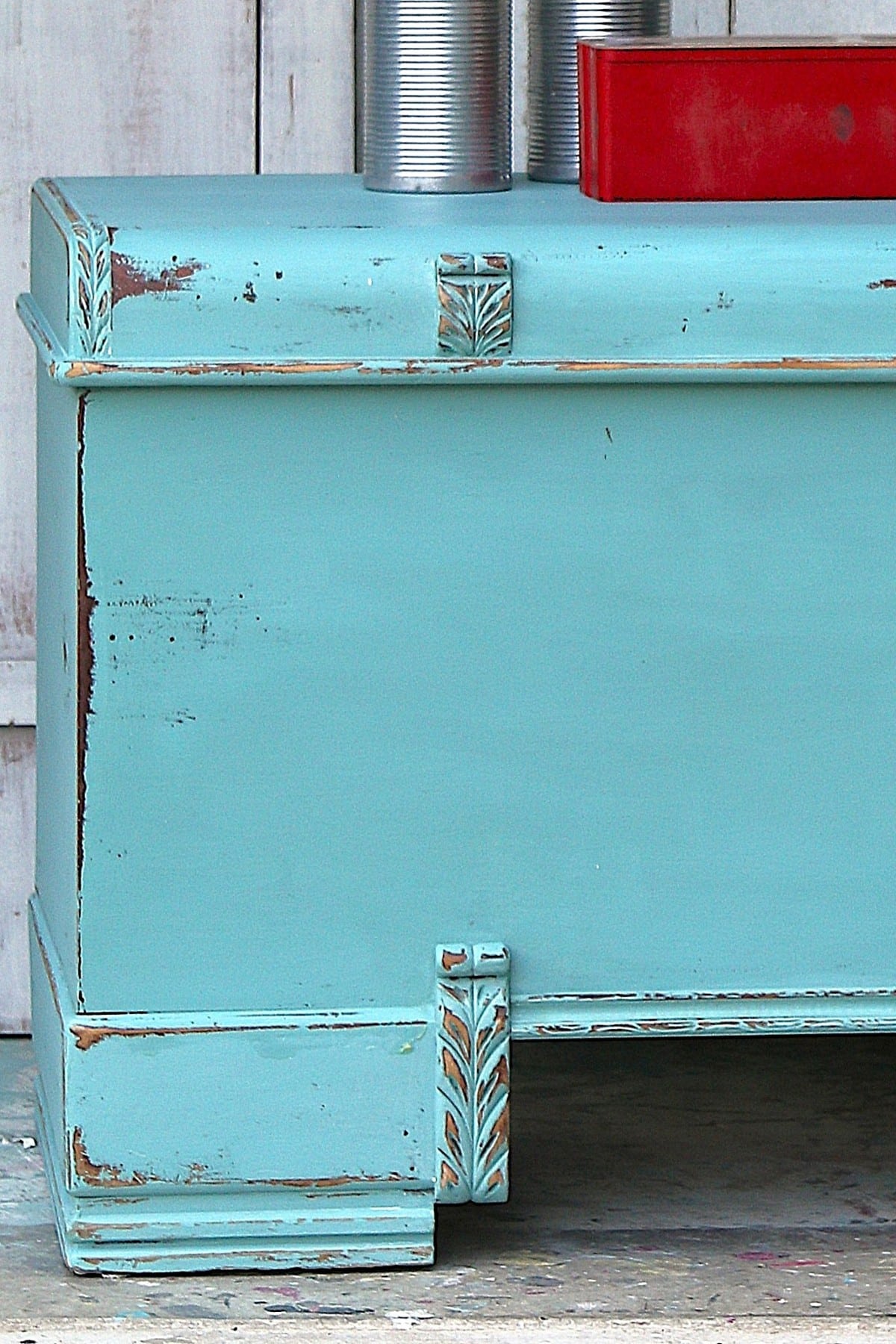
You can see where I sanded the corners, edges, and details rather heavily. The detailed trim I added at the bottom, in place of the drawer, looks like it belongs there. I did great. The cedar chest is larger than most I’ve worked on. It will be a nice piece for blanket storage or maybe a coffee table.
I thought about not painting the cedar chest. I was going to clean and oil the finish, but on closer inspection, the original finish had too much damage.
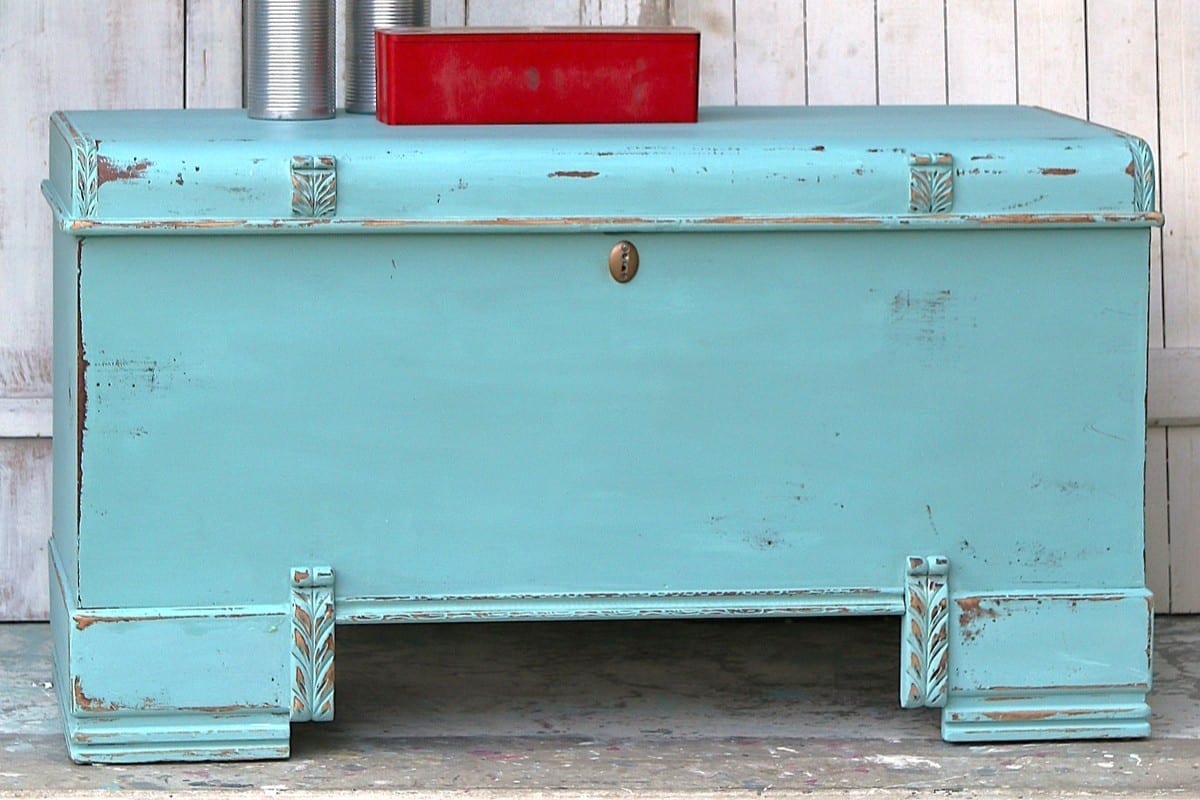
I’m glad I didn’t go with a two-tone paint finish. Given the amount of carved detail, the feet, and the overall look of the chest, two colors would have taken away from it rather than showcasing the cedar chest. Patting myself on the back.
Another Way to Distress Painted Furniture
Want to distress furniture without the mess? It’s called wet distressing, and you will be amazed by what I use to wet-distress the paint.
Video Tutorial: How to Wet Distress Paint
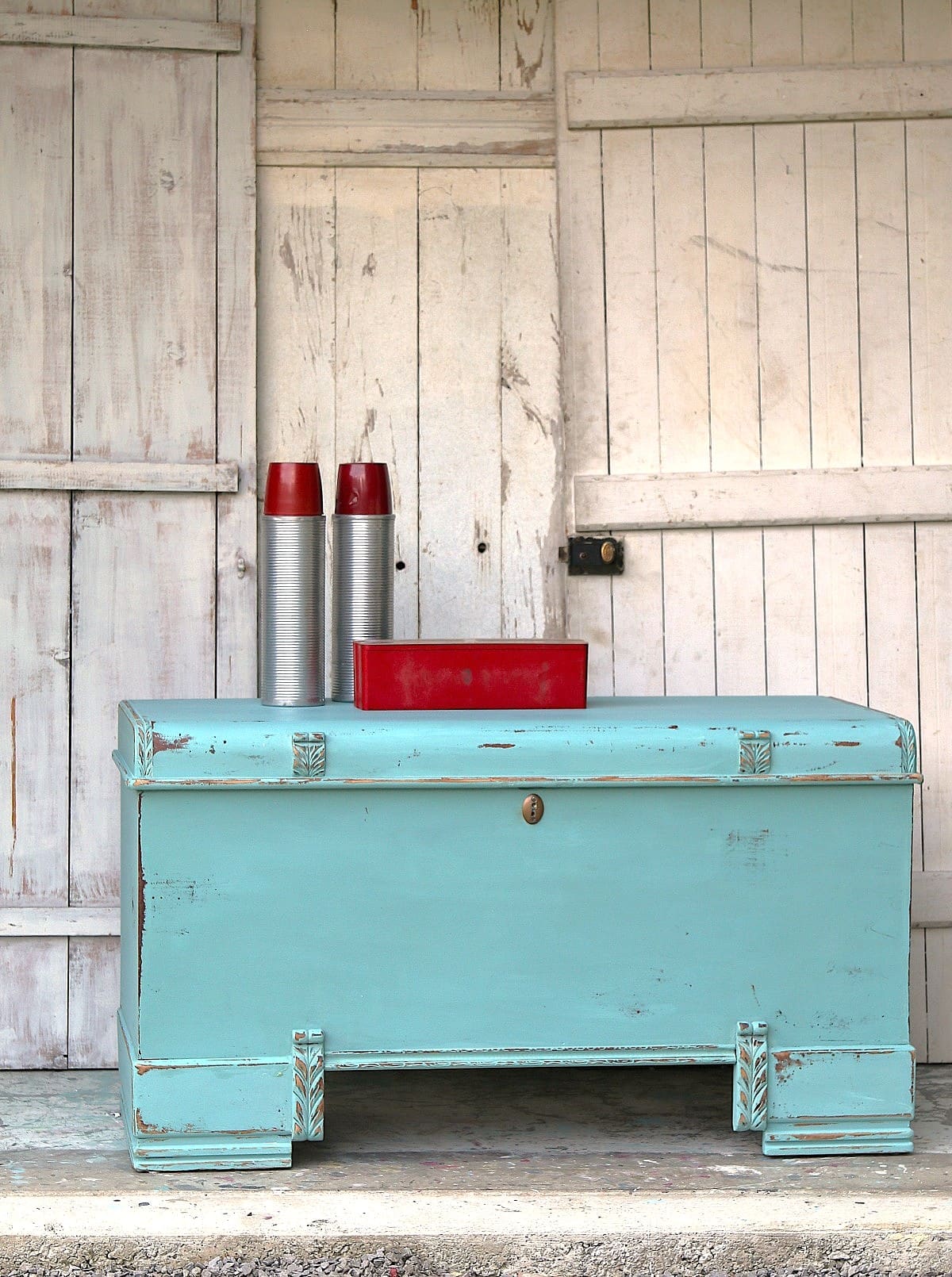
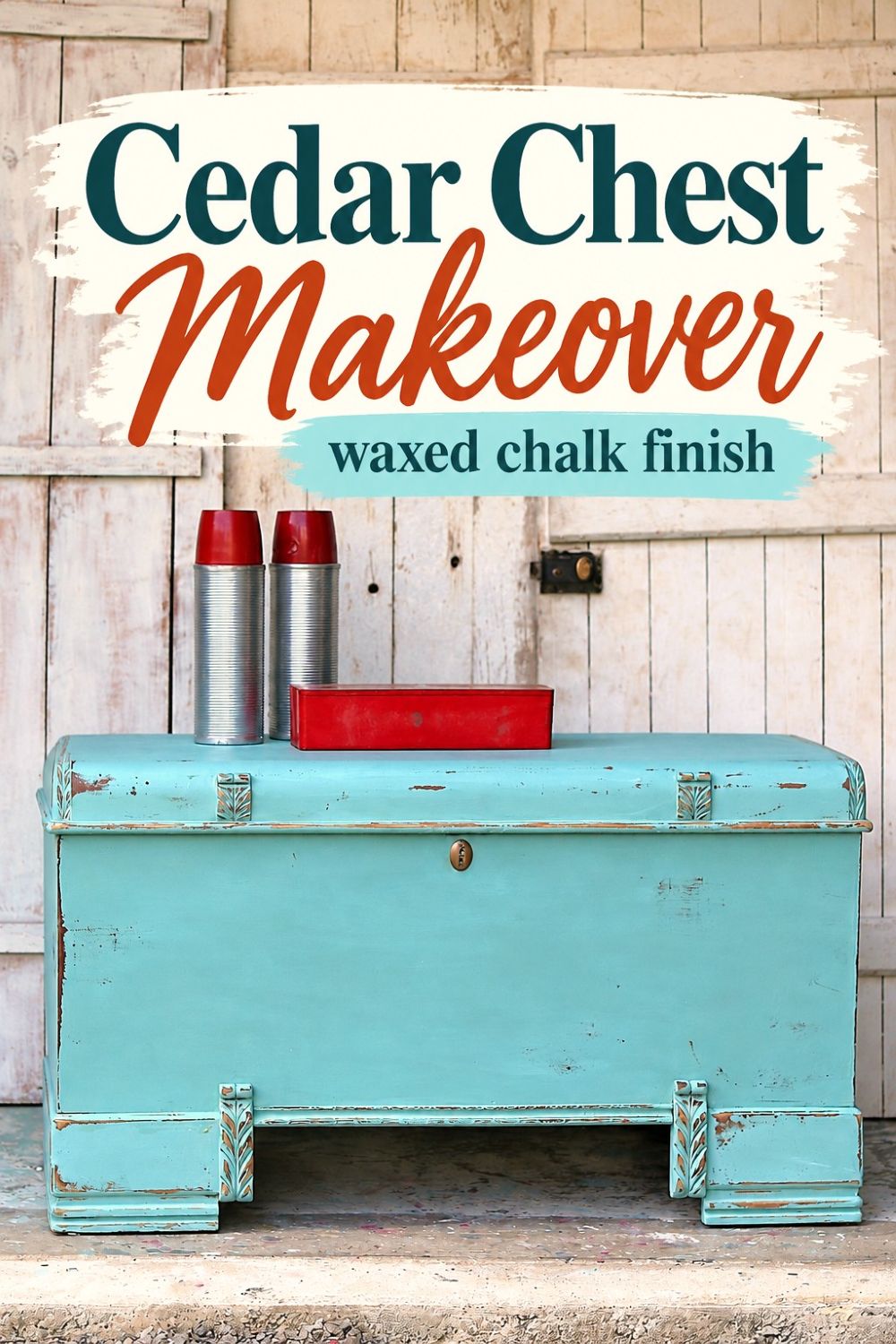
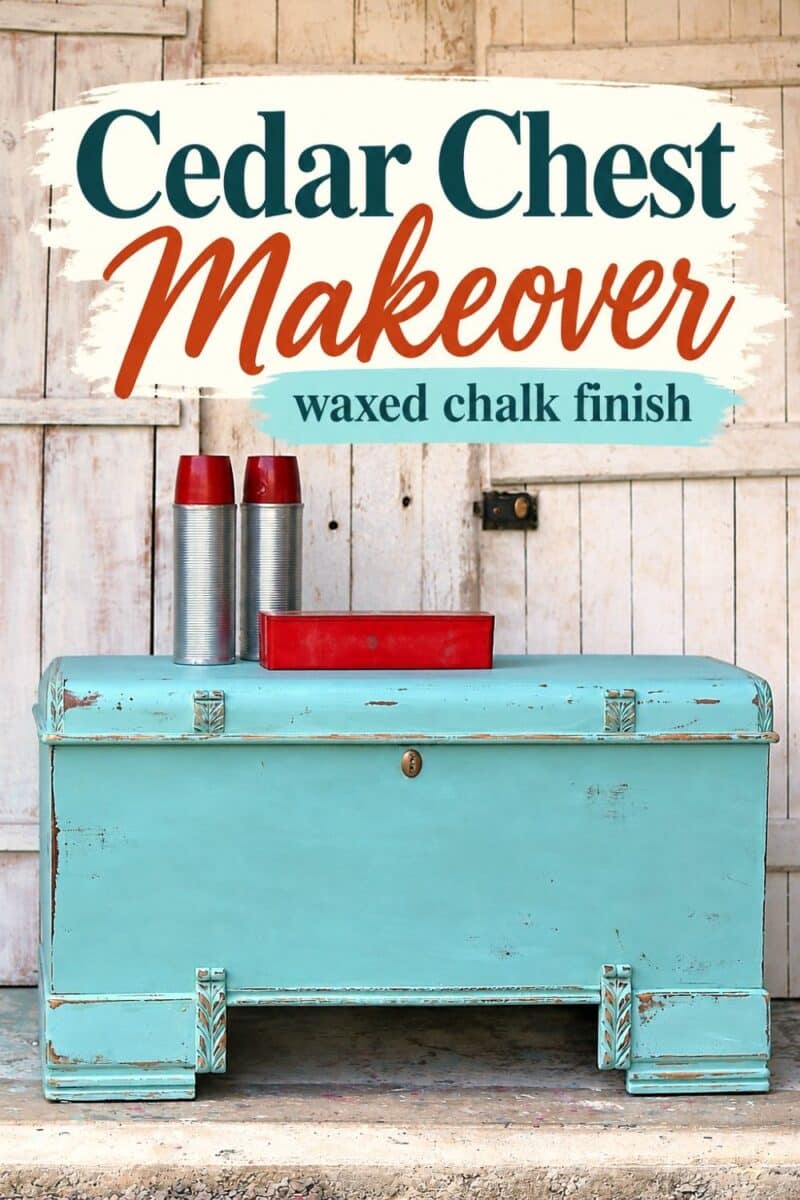
The red accessories really pop against the turquoisy blue paint. One of my favorite color combinations. So what do you think of the cedar chest? How about the color and distressing? Leave a note before you head out on the tour.
Furniture Fixer Upper Projects
Click the text links below the “before makeovers” photo collage to take the Furniture Fixer Upper Tour…..
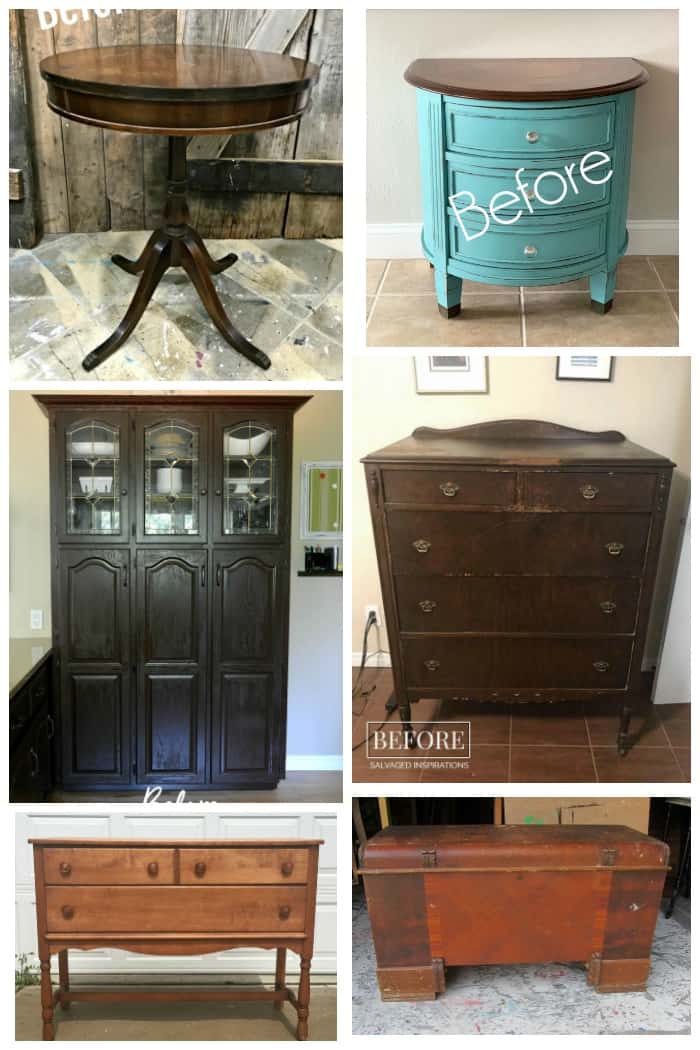
Refinish A Table – Just The Woods
Night Table Makeover – Confessions Of A Serial Diyer
Built In Kitchen Pantry Makeover – The Interior Frugalista
Fuchsia Sunset Painted Dresser – Salvaged Inspirations
How To Stencil Bone Inlay – Girl In The Garage
Waxing Chalk Finish Paint – Petticoat Junktion
As always, thanks for being here and have a great day, Kathy

I love that color. You come up with such cool stuff. Can never wait to see what your gonna do next. I have a bird cage just like the one in your picture. Right now it has a small cement dragon swinging in it. When Halloween gets here it will contain a raven.
“I did good.” LOL. Yes you did Kathy! The carved details are beautiful and you really made them pop with the distressing. Great idea adding the trim to the front too. It’s a winner!
Cavalier cedar chests were made in Chattanooga Tennessee.
Love the color you’ve chosen, and pics are gorgeous! That combination of white/ red and turquoise… yummy!
I agree, you did do good…you are my painting super hero!
Wow, you find the best chests! It was smart to remove that drawer and with the added trim, you’d never know it was even there! love the color too!! XOXO
I totally understand Nancy!
Thanks Denise.
Thanks Kathleen. I totally understand about the wood grain and saving the look.
Yes, I do have a big stash of stuff. I know everyone doesn’t have an accumulation of junk like I do.
ah thanks!
Thank you Gloria!
This one is really a winner. You did everything right!
It’s beautiful, Kathy! The color is gorgeous with just the perfect amount of distressing. I bet Thelma and Victor would be pleased.
I love what you did to the chest and especially the distressing. It looks great – I would love to have a stash of knobs, trim etc that you always seem to have. Enjoy reading your posts and seeing your creativity!
That sad chest now has a new life. I sort of agree with Nancy, above, about wood grain and such, but the surface of this need a pick-me -up. You are always so bold with your colors, I’m not half as adventurous as you. Everyone thinks I’m kinda out there-I think, but I tend to be reserved on colors. Muted, but not neutral or orange or yellow. You always hit the mark with your color choices.
So sweet that you found the inscription on the inside. I sometimes wonder the back story to these old pieces too. Anyway, LOVE the color and makeover Kathy. I’m heading over to take a peek at your FB LIVE now.?
I like the after, but to be honest, I liked the grain of the wood a bit better. If it had been me, I think I would have tried to clean up the woo, remove he orange finish, and finish with oil. I am not expert at this, but, sometimes, it makes me a little sad to see beautiful wood covered up
Wow, what a difference! Good job girl!
Girl, I love everything you do. I’ve been following you a couple of years. You are so creative. I thank you so much God Blessed you with creative!!
Just love the chest mskeover. I have a old cedar chest , gives me some great ideas.