

How To Layer Paint On Furniture Using Vaseline Petroleum Jelly
Learn how to layer paint on furniture with Vaseline in this easy step-by-step tutorial. There are just a few simple steps to layering paint, and this project includes plenty of photos and details to make it easy.
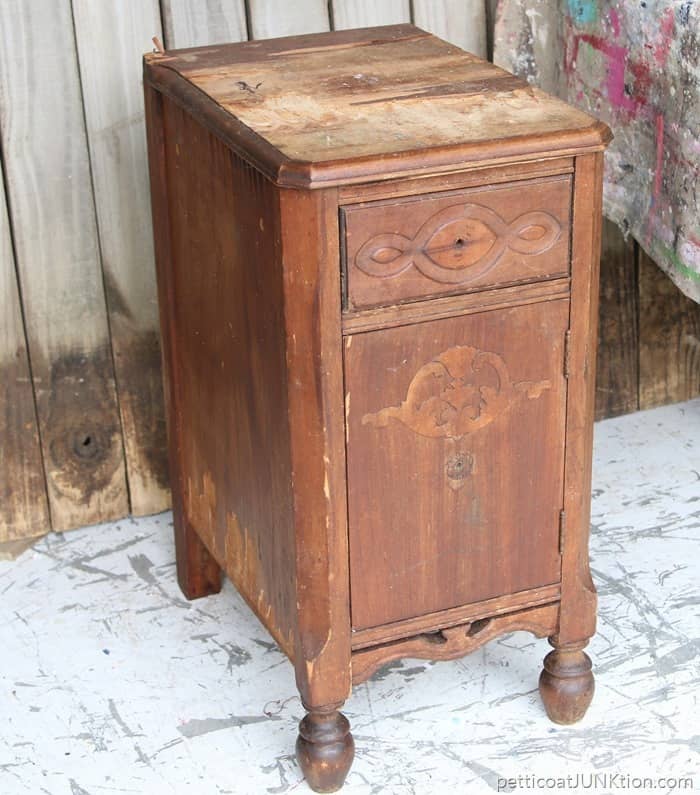
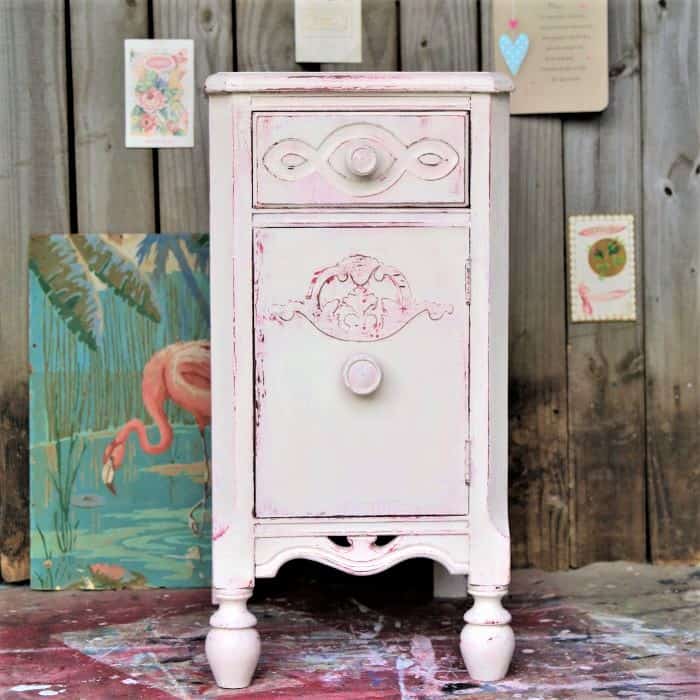
I bought this little nightstand/end table—whatever you want it to be—at My Favorite Junk Shop for ten dollars. Does it look a little odd to you? That’s because it’s one half (or less!) of a vintage vanity.
I actually love these little pieces. The peeling veneer and missing hardware didn’t scare me off at all. I knew at first sight it would be a stunner once it was painted and distressed.
How To Layer Paint On Furniture With Vaseline Petroleum Jelly
This step-by-step tutorial will walk you through the process of layering paint on furniture with Vaseline. I also made a quick video tutorial with more details. The video is just over a minute long and shows exactly how to apply Vaseline to achieve a perfectly layered paint finish.
Step 1. Prep Furniture
The piece I chose for this project has a lot of missing and bubbled veneer. It’s the perfect candidate for layering paint. The detailed wood applique and rough finish will look beautifully distressed.
First, I peeled off the loose veneer, then sanded the rough edges with 100-grit sandpaper. The coarse-grit paper made the surface nice and smooth. Next, I cleaned the table inside and out with Simple Green.
Step 2. Gather Paint Supplies & Tools
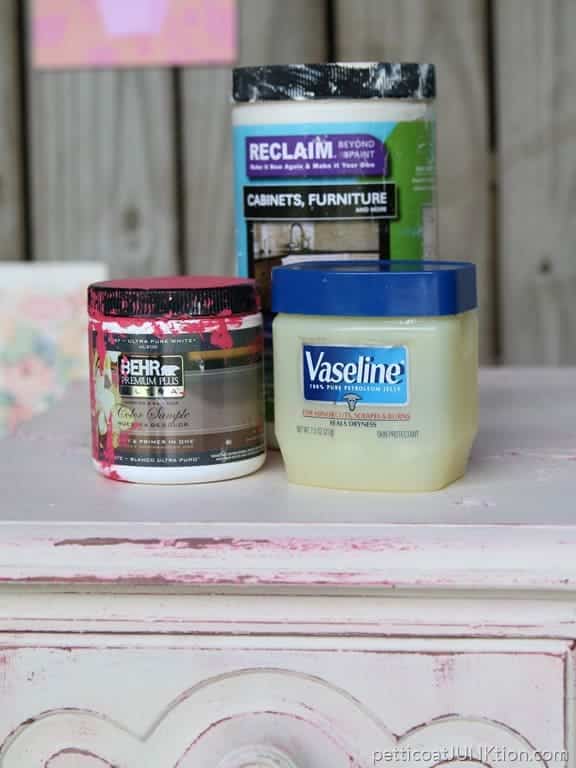
I went with girly colors for this nightstand, but you can choose any two colors you like. One of my favorite layering combos is black and green, with the green as the bottom layer. I also like green and turquoise layered together.
Project Supplies:
- Paint – 2 colors of your choice (a good contrast works best)
- Vaseline (petroleum jelly)
- 3M flexible sandpaper
- Paint brush
- Soft lint-free rag (I use old sheets)
These basic supplies are all you need for how to layer paint on furniture with Vaseline and get that pretty shabby chic finish.
Step 3. Apply The First Layer Of Paint On Furniture
Do you remember when shabby chic decor was all the rage? I do, and working on this project reminded me how much I still love the look. The soft colors and worn finish are just so pretty.
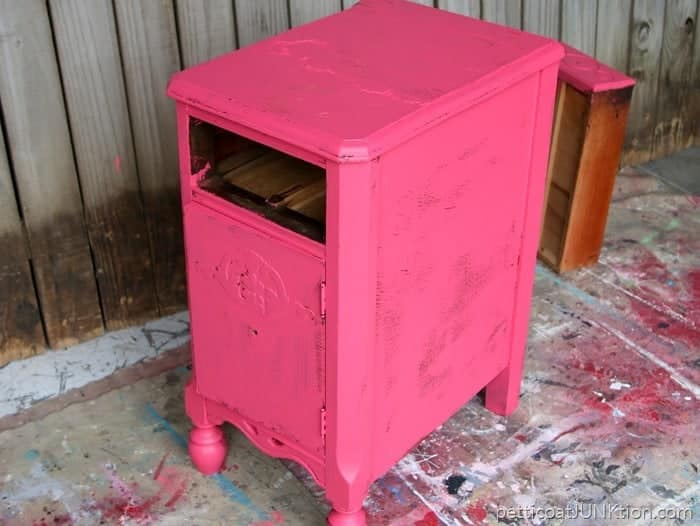
For the bottom layer, I used a pinkish coral Behr sample jar. It was on the oops paint shelf for 50 cents. You can’t beat that price, and a sample jar goes a lot further than you’d think. I brushed on one coat of paint, and it covered really well.
Step 4. Apply Vaseline To The Paint
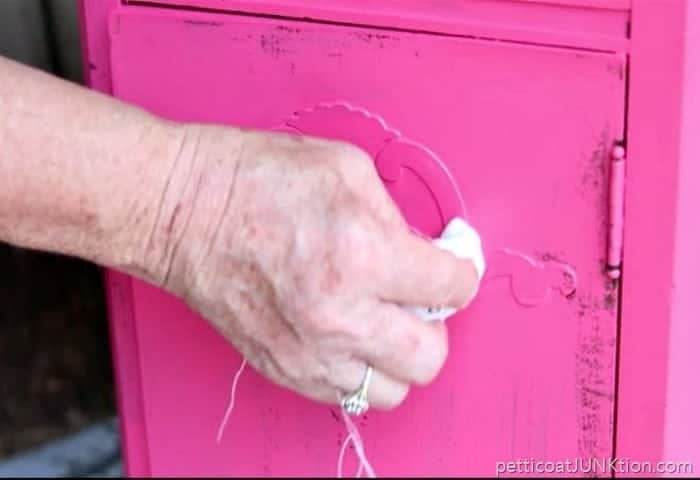
Once the base paint layer is completely dry, it’s time to add the Vaseline. This is the key step in how to layer paint on furniture with Vaseline and get that chippy, worn look.
Apply Vaseline only in the areas where furniture would normally wear. I used a clean, lint-free rag to dab it on. Old sheets are perfect for projects like this. They’re lint-free and also great for applying and buffing wax—just tear them into workable-size pieces.
Sometimes I put on a pair of nitrile or latex gloves, rub a very thin layer of petroleum jelly on the gloves, and then run my gloved hands over the detailed areas I want to look distressed or layered.
A thin layer of Vaseline is all you need. Don’t apply it too thickly or your brush will drag when you add the second layer of paint, and it will get very messy. Trust me—voice of experience here.
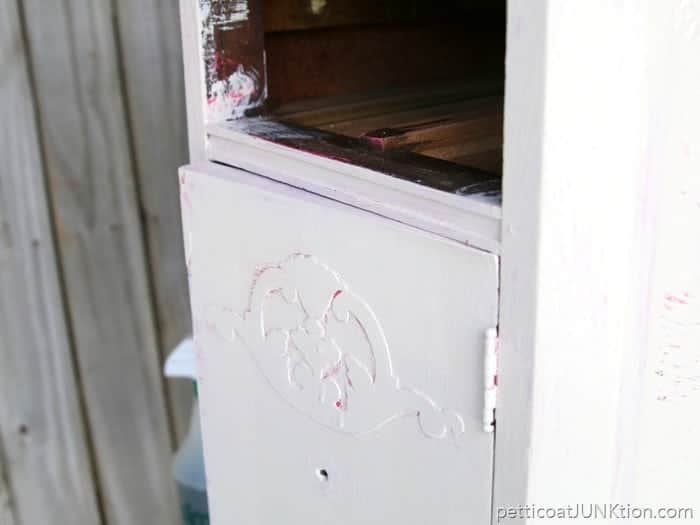
Step 5. Apply The Second Layer of Paint
Now it’s time to apply the top layer of paint. I used Beyond Paint in off-white. There should be a definite contrast between the two paint colors you choose. For example, you wouldn’t want to use two very similar shades of pink.
Brush the top color right over the areas where you applied Vaseline. It will look odd at this point, but that’s okay—you’ll see the magic when you start sanding.
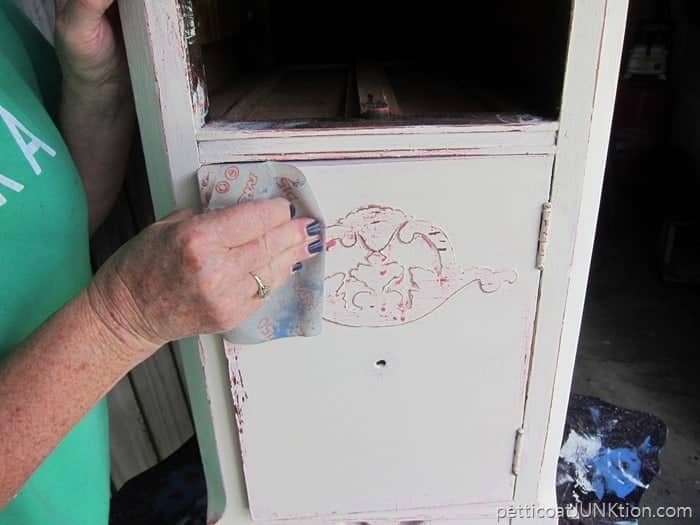
Step 6. Distress The Paint Layers
Once the top paint layer is dry, it’s time to distress the paint and reveal those pretty layers.
I used 100-grit 3M flexible sandpaper, but any sandpaper around 100–120 grit will work. Sand the painted areas where you applied Vaseline. You can also lightly distress other areas of the paint if you like.
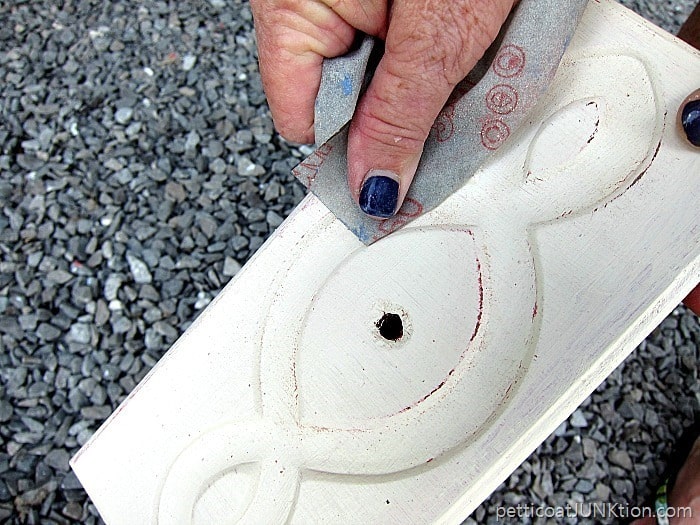
Where the Vaseline was applied, the top layer of paint will sand off easily, and you’ll be able to see the bottom layer. This is why this is called the Vaseline paint resist technique.
In most cases, sanding the paint without the Vaseline layer would cause both paint layers to come off, leaving you with raw wood. Using Vaseline is such a great way to distress paint and control where the wear shows.
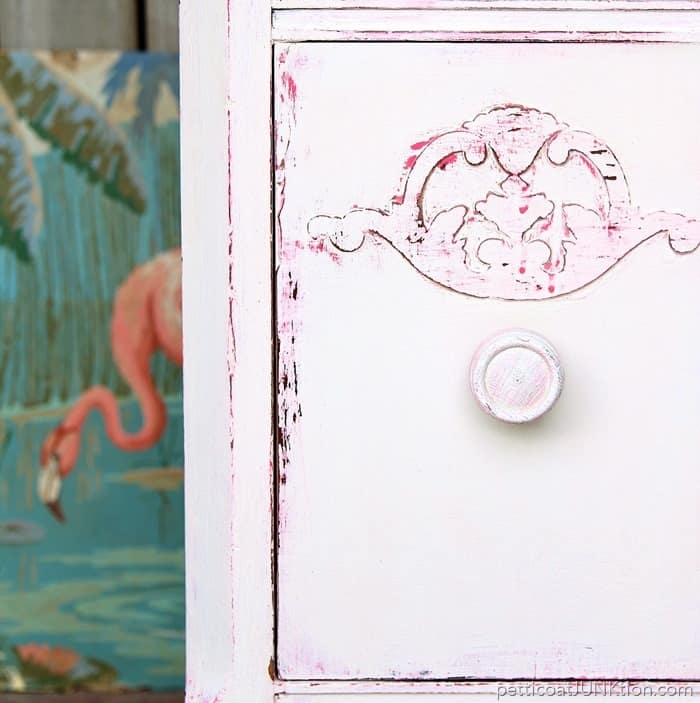
The beautiful decorative detail on the vanity door was still intact—win-win. Usually, the wood appliques are in pieces.
The knobs I used for the makeover were salvaged from the white-washed coral chest of drawers I painted earlier this year. The knobs work well because they don’t overshadow the pretty wood details.
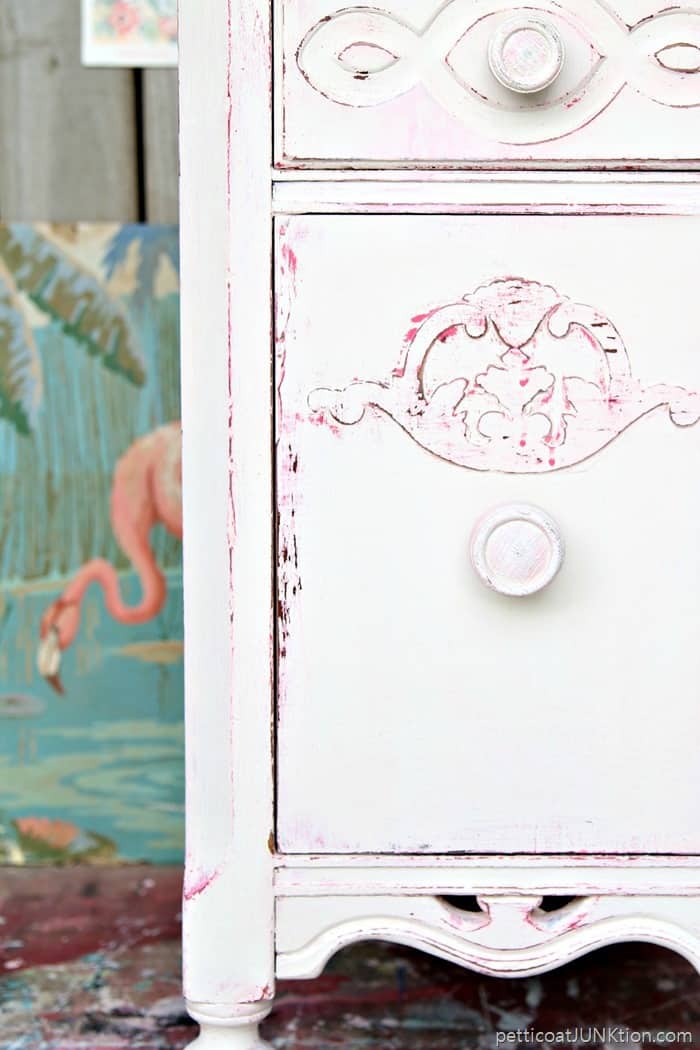
Don’t you love the little curvy detail on the bottom? How about giving this technique a try? I promise you’ll be amazed.
Love this shabby chic nightstand? In my complete guide to how to layer paint on furniture with Vaseline, I share the exact steps I use for layered paint, plus more color ideas and tips for getting soft, chippy distressing just like this.
For a really bold look, try this layering idea: cherry red paint over turquoise, as I did on this cedar chest. The cherry red cedar chest with the Martha Stewart stencil was the first Vaseline distressing technique I tried, and it’s still one of my favorites.
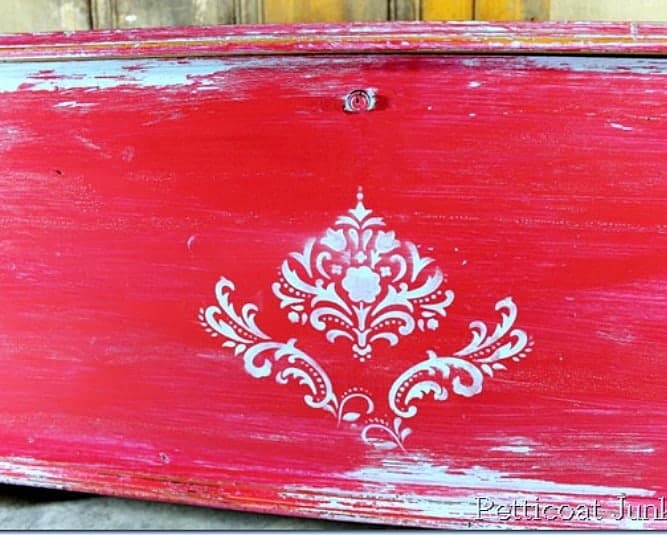
The cherry red cedar chest with the Martha Stewart stencil is the first Vaseline project I tried!
Have a great weekend. Kathy



Yes its beautiful 😍 I’m definitely going to try it
Love it, I will give it a try. Thanks
I like the before picture better, with some tweaking
Hey, Kathy
Great tutorial! I shall try this right away. Eadie
Thank you for explaining in lay man terms. Makes it easy for us beginners to understand
This is gorgeous! Wish I could find one like this, great job!!
I almost think this would have looked better in a different color than white. It’s a bit too washed out.
This is gorgeous. What a beautiful transformation. love the color too. I would love if you shared this at our link party on Sunday @ 4:00 EST, Dishing It & Digging It.
Beautiful! I have always loved the layering effect using pink and white. It always makes me think I am decorating a little girl’s room. It looks so delicate and feminine.
I want your vanity. Its beautiful.
Kathy,
You layered the paint and finish on just right to make this part of a vanity shine. Gorgeous!
Happy Creating,
Karen Marie
Such a pretty little table! The pink highlights the details perfectly Kathy. <3
Love the look, didn’t know it went out of style!!! 🙂
I love the details of this piece and the pink paint peeking out from under the white really brings them out. Lovely update!
I love the nightstand’s new look! Beautiful color choices!
I always say this, but it’s so true — I can’t believe that’s the same piece! What a beautiful transformation.
What a deal! You got lucky! I think I would have smiled the whole way home with that beauty in the car. Love what you did with it and the two colors are perfect together! Pinned:)
I like the slight peek-a-boo of pink as not so overwhelming.
OOH I love the shabby chic in this sweet piece, Kathy! Layering the pinks was a perfect choice! XO
How pretty is that! Love the subtle hints of pink showing through, Kathy. Such a pretty piece with all those curvy details. Pinning and sharing 🙂
Kathy, the pink poking through makes all the difference! What a happy piece!
Hugs,
Karin
This is so sweet! I love the color you chose! Beautiful!
Is your flamingo picture for sale? I love all your posts! You are a creative genius.
Ohhhhh! How I love, love, love this! The color is devine! Great makeover, as always, dear friend. Susie from Chelsea Project