

How To Paint Outdoor Garden Statues With Watercolors
Give dull outdoor concrete garden statues new life with watercolor paints designed for outdoor use.
After painting our neighbor’s porch goose, I was ready to tackle another lawn statue project.
How to Paint an Outdoor Statue
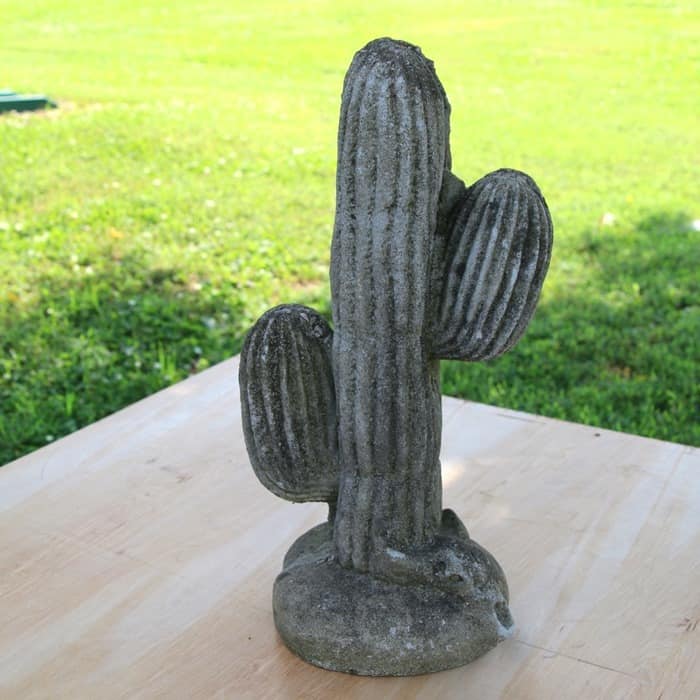
I picked up this concrete cactus at my favorite junk shop for $5. It was made of plain old rough concrete, not painted, just dull-looking, so it was the perfect blank slate. I didn’t even notice the steer skull at the base until I got it home. I think this cactus belongs in Texas.
Choose the Paint
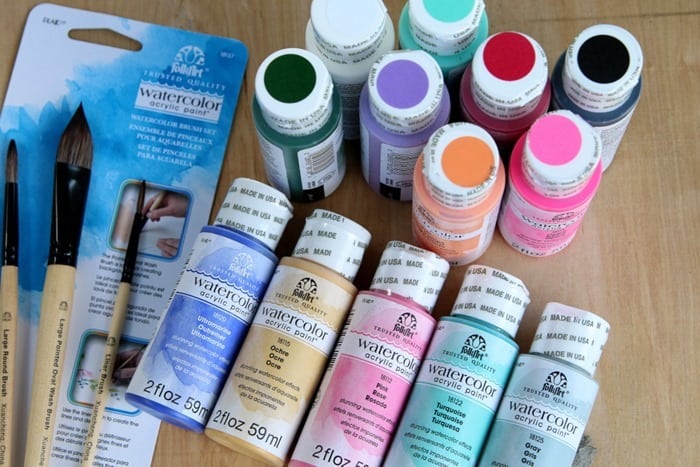
The paint I used for the project is FolkArt® Watercolor Acrylic Paint™. This watercolor paint can be used on both outdoor and indoor items, so it was perfect for the cactus. I always thought watercolors were just for paper. What about you?
Paint the Body of the Statue
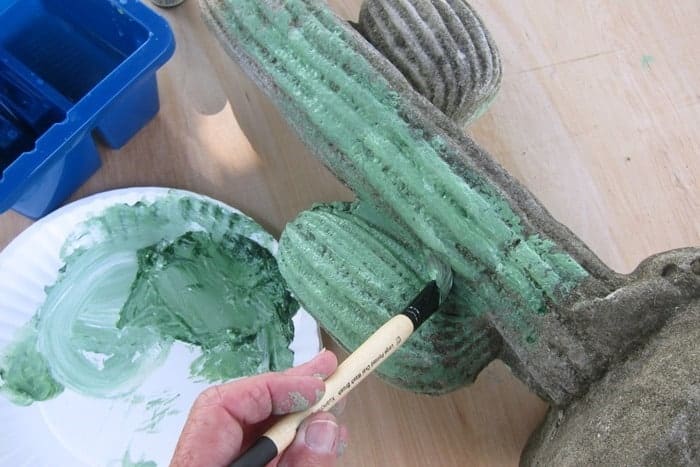
The first step was to give the cactus an all-over paint finish. I mixed the white and sap green watercolors to make a pale green, then brushed it all over the cactus. I dipped the brush in water as needed to help the paint spread.
The bold, concentrated colors spread easily. I didn’t even use half of the 2-ounce bottle of sap green, and you’ll see that color again later in this makeover.
Add a Second Paint Color
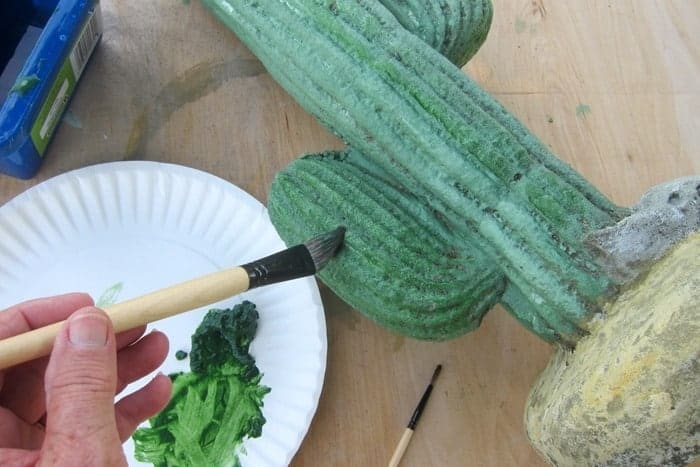
After the first coat dried, I brushed sap green watercolor over the cactus ridges. I used the largest brush from the FolkArt® Watercolor Brush Set. The darker color added some nice depth.
Apply a Third Paint Color
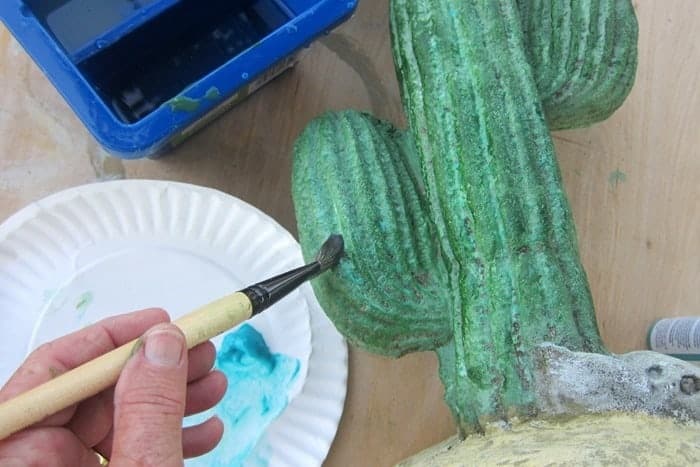
The third step was to paint the cactus grooves with turquoise watercolor. I thinned the paint by dipping the brush in water and mixing it with the paint on a paper plate. The thinned turquoise became more of a wash and gave the pale and darker greens a nice contrast.
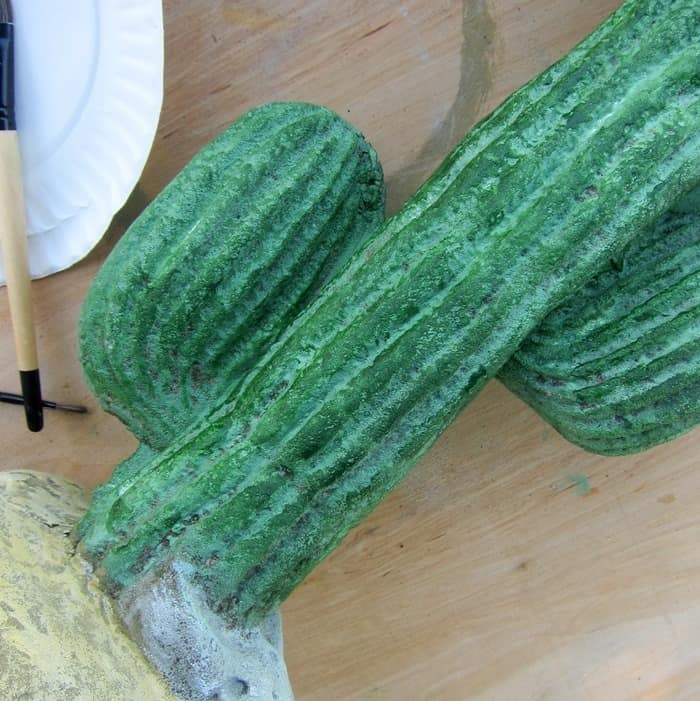
Here’s how the cactus looked with three layers of different paint colors. Layering the colors kept the finish from looking flat and dull. It just wouldn’t have looked the same with one overall color.
Paint Cactus Spines
We had one more step: adding those little prickly things, which I learned are called spines. We didn’t have many cacti where I grew up in Arkansas.
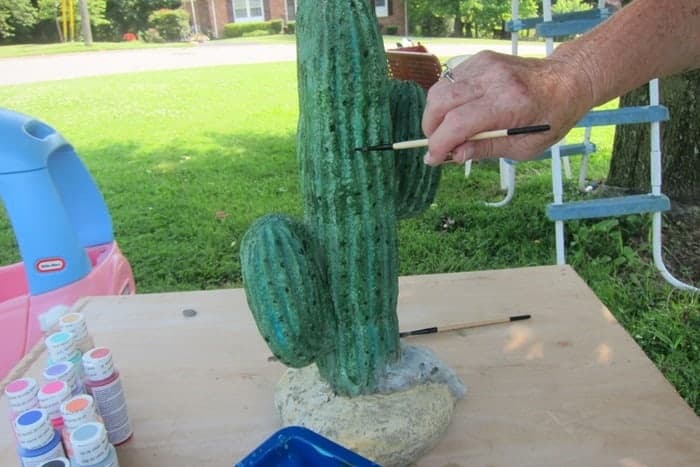
I used the smallest watercolor brush to dab black paint here and there along the cactus ridges. You might notice a kid’s car in the background. Miss Sofi was kind enough to take this photo of me adding the spines.
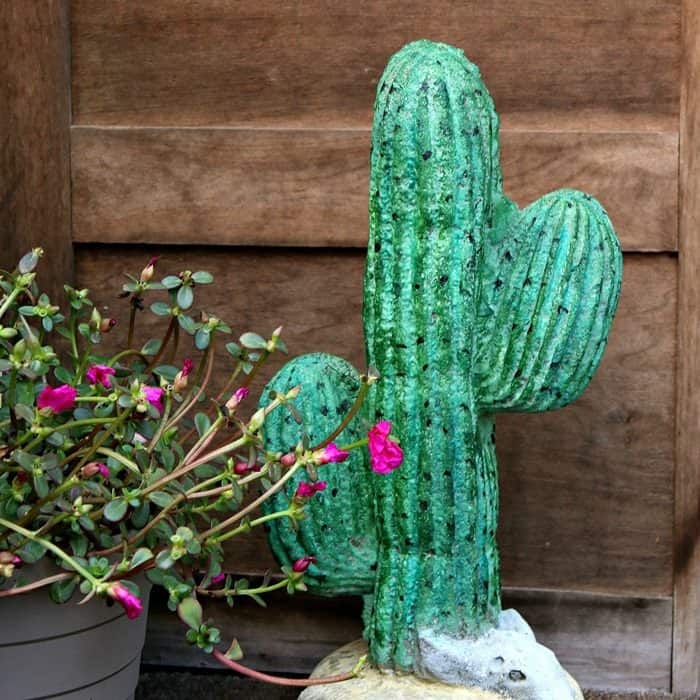
Those black spines were the finishing touch that brought everything together.
The cactus is just the coolest thing ever. The secret to this look is using several paint colors so it doesn’t look flat or one-dimensional. The whole paint job took less than three hours, including downtime…watching paint dry.
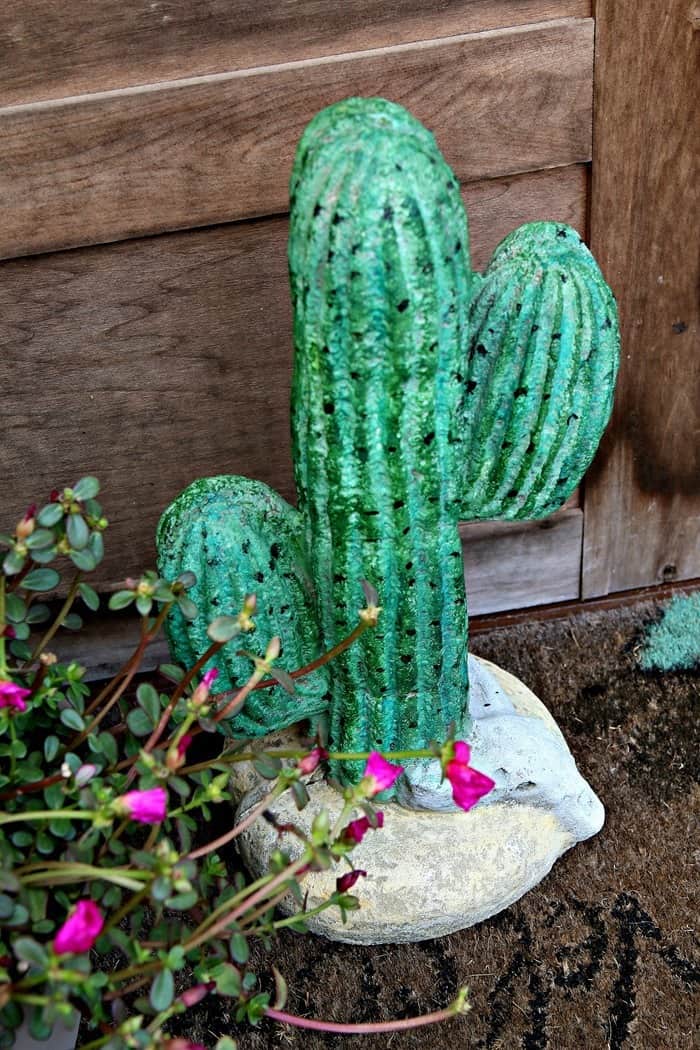
See why I’m tickled with the paint job? I’m doing the happy dance. I painted the steer skull with a mixture of white and gray watercolors, and the sand or dirt with a mixture of white and ochre.
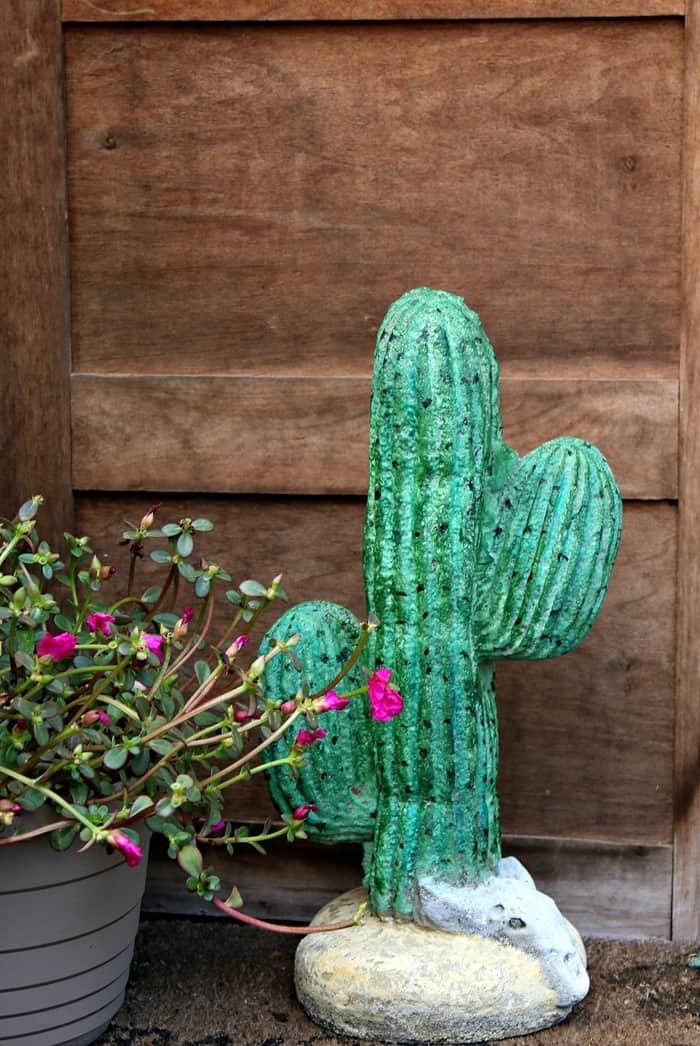
Do you love this little cactus as much as I do? I always thought watercolors were just for canvas art, but I’ve changed my mind. I’ve now used them on wood, fabric, and concrete. The colors are bold and almost luminescent. I feel more watercolor projects coming on.
Have you used watercolors on canvas or anything else? Leave me a note, and thanks for being here! Kathy


Yes, if it is outdoor paint but I would also seal it after painting with outdoor sealer.
Would acrylic art paints work as well?
I love how this one turned out, Kathy. I would never have thought that watercolours could be used outside but I’m going to give it a try. We have quite a few garden ornaments that need a new lick of paint.
You definitely made that cactus come alive with your fabulous hand painting touches! Love the layers and how realistic it turned out! Bet statues are a fun challenge I ought to try… Featured you on this weekend’s New Upcycle Ideas 850!
Oh, yeah, I love this! You did a great job with the colors and details.